

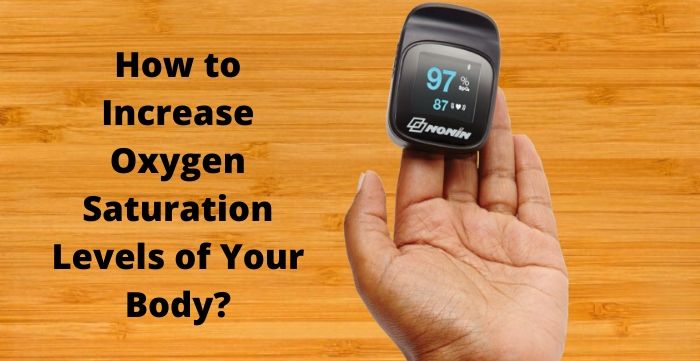

A pulse oximeter reading in the low 90s is enough to make anyone reach for their phone and start searching. Oxygen saturation — the percentage of hemoglobin in your blood carrying oxygen — is one of the simplest vital signs to measure and one of the easiest to misread. The good news is that for most healthy people, small, well-supported changes in breathing technique, posture, activity, and lifestyle can help oxygen saturation move toward a normal range. This guide walks through what the number actually means, which interventions have real clinical support, and when a low reading is a signal to call a doctor rather than try a home remedy.
Key takeaways
- Normal oxygen saturation (SpO2) for a healthy adult at sea level is 95% to 100%, and levels of 92% or lower warrant a call to your provider, while 88% or lower needs immediate medical attention (MedlinePlus).
- Pursed-lip and diaphragmatic breathing have documented, measurable benefits: a 2026 study in Scientific Reports found combined breathing-and-stretching routines improved oxygen saturation and carbon dioxide levels more than breathing exercises alone in COPD patients.
- Quitting smoking restores blood oxygen-carrying capacity fast — carbon monoxide levels drop back to normal within about 12 hours of the last cigarette, letting oxygen flow more easily (Cleveland Clinic).
- A home pulse oximeter is a screening tool, not a diagnostic one — FDA-approved devices can carry a 2-3% error window compared to arterial blood gas measurements (Healthline).
- Iron deficiency is common enough to matter for oxygen delivery: it affects roughly 40% of people in developing countries and 10% in developed countries, making it the most common cause of anemia worldwide (NCBI/StatPearls).
What counts as a normal oxygen saturation level?
Before trying to raise a number, it helps to know what “normal” actually is. For most healthy adults at sea level, peripheral oxygen saturation ranges from 95% to 100%, according to the NIH’s StatPearls clinical reference. That number reflects how much of the hemoglobin in your red blood cells is bound to oxygen as it travels from your lungs to the rest of your body. For more on getting an accurate reading, see which finger is best for a pulse oximeter, and for the pulse-rate number on the same display, see what PR BPM means on a pulse oximeter.
Clinical guidance draws a few clear lines:
- 95-100%: Considered normal for a healthy person at rest.
- 90-94%: May indicate mild hypoxemia and is worth mentioning to a doctor, especially if it’s a change from your usual baseline.
- 92% or lower: Contact your healthcare provider, per MedlinePlus guidance.
- 88% or lower: Seek immediate medical attention.
A few factors shift this baseline without indicating disease. People with chronic lung conditions like COPD may run somewhat lower and still be considered stable, and people living at higher elevation naturally have lower readings because there is less oxygen in the surrounding air. It’s also worth remembering that consumer devices aren’t lab-grade: an FDA-approved pulse oximeter can differ from an arterial blood gas test by 2-3%, and that error margin grows in patients with poor circulation, cold hands, or dark nail polish. If you’re shopping for a device, our pulse oximeter buying guide covers what to look for in an accurate, reliable model.
1. Practice pursed-lip breathing
Pursed-lip breathing — inhaling through the nose and exhaling slowly through pursed lips, roughly twice as long as the inhale — is one of the most studied respiratory techniques for people with breathing difficulty. Researchers publishing in Scientific Reports explain the mechanism plainly: pursed-lip breathing prevents airway collapse and improves oxygen saturation during rest by extending the exhalation period.
How to do it:
- Sit upright, relax your shoulders.
- Inhale slowly through your nose for two counts.
- Purse your lips as though you’re about to whistle.
- Exhale gently and slowly through pursed lips for four counts.
- Repeat for 5-10 minutes, several times a day.
This costs nothing, has no side effects for most people, and can be done anywhere — at a desk, in a waiting room, or during a short walk.
2. Add diaphragmatic (belly) breathing
Diaphragmatic breathing trains you to breathe using your diaphragm rather than shallow chest breaths, which increases the volume of air moving in and out of the lungs per breath. The physiological benefit goes beyond the lungs: diaphragmatic breathing reduces neuromuscular activity by lowering sympathetic nervous system activity and increasing parasympathetic activity, which is part of why it also tends to lower perceived breathlessness and anxiety.
A 2026 hospital study on COPD patients (Arshad et al., published via ResearchGate) found that deep breathing exercises were effective in improving oxygen saturation and functional capacity among hospitalized patients, using six sessions of 15-20 minutes over three weeks. You don’t need to be hospitalized to benefit from the same basic technique — a few minutes practiced daily builds the habit. Good indoor air quality supports this too; see our guide on how to increase oxygen levels in your home.
3. Try guided breath training devices
Simple mechanical tools can reinforce breathing exercises. Balloon-blowing exercises, for instance, have shown measurable results in clinical settings: a study published in the Critical Medical Surgical Nursing Journal found that balloon-blowing exercises can enhance respiratory muscle strength, oxygen saturation, and reduce respiratory frequency in COPD patients. Incentive spirometers work on a similar principle, encouraging slow, controlled deep inhalations that expand the lower lungs, an area shallow breathing often misses.
4. Get moving — even modest aerobic activity helps
Aerobic exercise doesn’t just build stamina; it trains muscles to extract and use oxygen more efficiently, which can make a real difference in daily function. A pulmonary rehabilitation specialist writing for the COPD Foundation put it directly: a person doing correct pursed-lip and diaphragmatic breathing can increase their oxygen saturation numbers by a couple of points with activity and walking. The mechanism isn’t about the lungs producing more oxygen — it’s that muscles in better condition do a better job of utilizing the oxygen that’s available, so the same task requires less oxygen debt.
Walking, stationary cycling, and supervised pulmonary rehab programs are the most studied options. Start at a pace where you can hold a conversation, and progress gradually rather than pushing into breathlessness — our guide on the benefits of fitness walking is a reasonable place to start if you’re building the habit from scratch.
5. Correct your posture
Slouching compresses the diaphragm and lower lungs, restricting the amount of air you can move with each breath. Sitting or standing upright — shoulders back, chest open — gives your lungs their full working capacity. This is a zero-cost adjustment, and it pairs naturally with the breathing techniques above: it’s difficult to perform deep diaphragmatic breathing effectively while hunched forward.
For anyone who spends long hours at a desk, setting a periodic reminder to check posture and take a few deep, slow breaths is a simple habit that supports both technique and lung mechanics.
6. Quit smoking
Of every lifestyle factor connected to oxygen saturation, smoking cessation has arguably the most immediate and well-documented physiological effect, because it directly addresses a mechanism that suppresses oxygen transport: carbon monoxide binds to hemoglobin more readily than oxygen does, crowding out the oxygen your blood would otherwise carry.
The timeline is fast. Within about 12 hours of quitting, carbon monoxide levels in the blood drop back to normal, allowing oxygen to flow more easily, according to SolutionHealth’s clinical review of smoking-cessation recovery. Cleveland Clinic notes the same underlying shift: as carbon monoxide levels fall, oxygen levels rise, benefiting essentially every part of the body. Longer term, lung function measured by spirometry can improve by up to about 10% over the three-to-nine-month window after quitting, per NHS-sourced guidance, and easier breathing is often noticeable within two to four weeks. If you’re in the middle of quitting, our piece on the quit-smoking recovery timeline covers the wider set of changes your body goes through.
7. Stay hydrated
Blood plasma is mostly water, and adequate hydration keeps blood at the right viscosity to move efficiently through the lungs’ capillary beds, where gas exchange happens. Dehydration thickens blood and can make the heart and lungs work harder to circulate oxygenated blood. This isn’t a dramatic fix, but it’s a foundational one — before troubleshooting fancier interventions, make sure water intake is adequate for your body size, climate, and activity level.
8. Check your iron levels
Oxygen saturation (SpO2) measures the percentage of hemoglobin carrying oxygen — but if you don’t have enough hemoglobin in the first place, that percentage can look fine while your blood still isn’t delivering enough total oxygen to your tissues. Iron is essential to building hemoglobin, and iron deficiency is far more common than most people realize: it affects over 2 billion people worldwide and is the most common cause of anemia globally, per NIH’s StatPearls. Separately, the World Health Organization has estimated that approximately 1.62 billion people worldwide are affected by anemia — nearly 25% of the global population.
If you feel persistently fatigued despite a normal-looking SpO2 reading, ask your doctor about a ferritin test and complete blood count rather than assuming a pulse oximeter tells the whole story.
9. Mind your environment
Air quality and altitude both affect how easily your lungs load oxygen into your blood. People at higher elevations naturally run lower readings because there’s less oxygen in the surrounding air — this is expected and typically not a medical problem for healthy people who acclimate over days. Indoor air quality matters too: poor ventilation, smoke, and high particulate pollution all make the lungs’ job harder. Ventilating living spaces, using air purifiers where pollution is a concern, and avoiding secondhand smoke all support easier oxygen exchange — see our related guide on how to increase your oxygen level for more on environmental factors.
10. Use a pulse oximeter to track trends, not panic over one reading
A home pulse oximeter is genuinely useful — but as a trend-tracking tool, not a single-number verdict. Readings vary with circulation, movement, cold fingers, and device quality, and researchers studying pulse oximeter accuracy at simulated high altitude found that even medically approved devices are not in full agreement with reference blood-gas measurements at low saturation levels, which is why clinical protocols still validate them against gold-standard arterial blood sampling. If you’re monitoring at home:
- Take readings while resting, warm, and still.
- Track a few readings across the day rather than reacting to one.
- Watch for a consistent downward trend more than a single low number.
- Contact your provider at 92% or below, and seek immediate care at 88% or below, especially alongside symptoms like shortness of breath, chest pain, confusion, or bluish lips or fingertips.
When to see a doctor instead of trying home techniques
Breathing exercises, posture correction, and quitting smoking are genuinely supported by research — but they are not substitutes for medical care when oxygen saturation is dropping for an unclear reason, especially in someone with an existing heart or lung condition, a recent respiratory infection, or new shortness of breath at rest. Research on simulated high-altitude hypoxia notes that severe, acute drops in oxygen availability can affect cognitive speed and function and, in extreme cases, cause loss of consciousness — this is not something to manage with breathing exercises alone. If a reading is persistently low, if it’s paired with chest pain, confusion, bluish skin or lips, or if it appears suddenly without an obvious cause, treat it as a medical situation and get evaluated rather than trying to self-correct the number.
Frequently asked questions
Can you raise your oxygen saturation level quickly at home?
Sitting upright, practicing pursed-lip or diaphragmatic breathing for a few minutes, and taking slow, controlled breaths can produce a modest, fairly quick improvement for many healthy people. A large or persistent drop, however, needs medical evaluation rather than a home fix.
Does deep breathing actually increase blood oxygen saturation?
For people with breathing difficulty tied to conditions like COPD, yes — clinical studies have measured real improvements in oxygen saturation and reduced disease severity from structured breathing programs. For healthy people already at 95-100%, the ceiling effect means there’s limited room to “increase” the number further, though breathing technique still supports efficient oxygen use during exertion.
What foods help increase oxygen levels in the blood?
Iron-rich foods (lean meats, legumes, leafy greens) support hemoglobin production, and vitamin C helps iron absorption. These support the blood’s oxygen-carrying capacity over time rather than changing a pulse oximeter reading in the moment.
Is 94% oxygen level okay?
For many healthy adults this sits at the lower edge of typical and is usually not an emergency, but readings between 90% and 94% may indicate mild hypoxemia and are worth discussing with a doctor, particularly if it’s a change from your usual baseline or paired with symptoms.
Can exercise permanently raise oxygen saturation?
Regular aerobic exercise doesn’t typically push a healthy person’s SpO2 higher than the normal ceiling, but it improves how efficiently muscles use available oxygen, which is why fitter individuals can do more before feeling short of breath, even if their underlying lung condition hasn’t changed.
This article is for general educational purposes and isn’t a substitute for individualized medical advice. If you have concerns about your oxygen saturation levels, symptoms of low blood oxygen, or an existing heart or lung condition, talk to a healthcare provider. If oxygen saturation drops to 88% or below, or is accompanied by chest pain, confusion, or bluish lips or fingertips, seek immediate medical attention.
Sources
- MedlinePlus (NIH) — Pulse Oximetry: Medical Test overview and reference ranges
- StatPearls / NCBI Bookshelf — Oxygen Saturation, clinical reference (updated June 2026)
- Scientific Reports (Nature) — Comparing effects of breathing exercises alone vs. combined with stretching in COPD, 2025
- ResearchGate — Arshad et al., Effects of Deep Breathing Exercises on Oxygen Saturation and Functional Capacity in Hospitalized COPD Patients
- Critical Medical Surgical Nursing Journal — Effectiveness of Balloon Blowing Exercise on Oxygen Saturation in COPD Patients
- COPD Foundation — Will Exercise Improve My O2 Saturation?
- SolutionHealth — A Timeline of What Happens After You Quit Smoking
- Cleveland Clinic — What Happens to Your Body When You Quit Smoking?
- SmokeCalc — Quit Smoking Timeline, 2026 guide (NHS/CDC/American Lung Association sourced)
- Healthline — Blood Oxygen Levels: What Is a Normal Level?
- NCBI/PMC — Validity of pulse oximetry during simulated extreme altitude hypoxia
- StatPearls / NCBI Bookshelf — Iron Deficiency and Microcytic Hypochromic Anemia
- NCBI/PMC — Differential diagnosis of iron deficiency anemia (WHO anemia prevalence estimate)


Hi, I’m Mamon, the content creator behind this blog. I share my experience in blogging, WordPress, SEO, and affiliate marketing through honest product reviews, in-depth buying guides, and practical how-to articles. Every piece of content is thoroughly researched and written to help readers make informed decisions.