

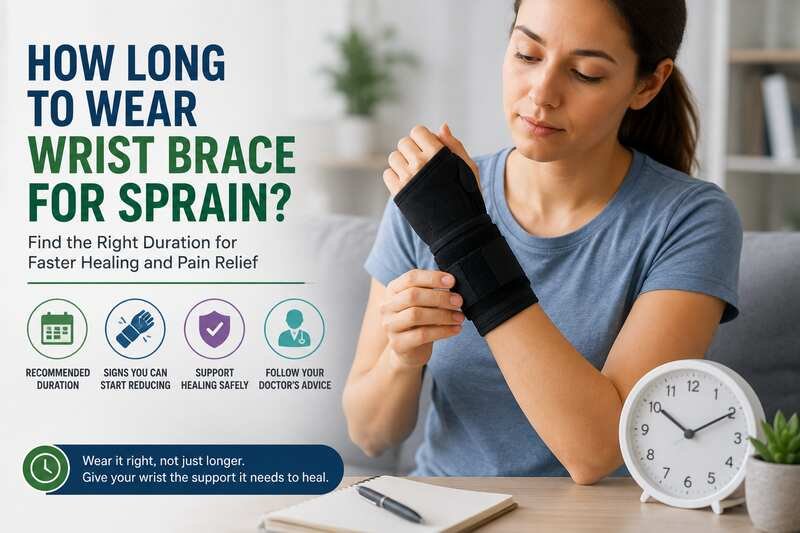

How long to wear wrist brace for sprain? Most mild sprains need a brace for about one to two weeks. Moderate and severe sprains often need one for several weeks longer. The exact timeline depends on how badly you stretched or tore the ligament.
This guide breaks down how long to wear wrist brace for sprain by severity. It also covers how to wear one correctly and what else speeds up healing alongside it. Always follow your own doctor’s specific guidance first, since every wrist sprain heals a little differently.
Key Takeaways
- Mild (Grade 1) sprains usually need a brace for 1 to 2 weeks.
- Moderate (Grade 2) sprains often need one for 3 to 6 weeks.
- Severe (Grade 3) sprains can require bracing for 6 weeks or more, sometimes alongside other treatment.
- Pair the brace with rest, ice, compression, and elevation (RICE) for the first 48 hours.
- See a doctor if pain, swelling, or numbness doesn’t improve within a couple of days.
What Is a Wrist Sprain?
A wrist sprain happens when you stretch or tear one of the ligaments that hold your wrist bones together. Your wrist relies on a network of small ligaments to keep its eight carpal bones stable during everyday movement. It usually follows a fall onto an outstretched hand, a sudden twist, or a hard impact during sports. Athletes in contact and ball sports see this injury often. It happens just as easily from tripping on a sidewalk or slipping on a wet floor.
The American Academy of Orthopaedic Surgeons classifies wrist sprains into three grades:
- Grade 1 (mild): The ligament stretches but doesn’t tear.
- Grade 2 (moderate): The ligament partially tears, and you may lose some function.
- Grade 3 (severe): The ligament tears completely, or it pulls away from the bone entirely.
The grade of your sprain drives almost every treatment decision that follows, including how long to wear wrist brace for sprain.
A doctor typically diagnoses the grade through a physical exam, and sometimes an X-ray to rule out a fracture. Don’t try to self-diagnose the severity based on pain alone. Mild sprains can still hurt quite a bit at first, while some severe tears feel deceptively manageable once swelling sets in.

How Long to Wear Wrist Brace for Sprain
The honest answer: it depends on the grade of your sprain, but here’s what typically happens at each stage.
Grade 1 (mild) sprains usually need a brace for about 1 to 2 weeks. Swelling and pain settle down quickly, and most people can start gentle movement again within days.
Grade 2 (moderate) sprains often need a brace for 3 to 6 weeks. Your doctor may also recommend a period of complete immobilization before you start range-of-motion exercises.
Grade 3 (severe) sprains can require bracing for 6 weeks or longer. Some severe tears need a cast, splint, or even surgery instead of a brace alone. The ligament itself typically takes 8 to 12 weeks to heal. Full recovery of strength and motion can take 6 to 12 months.
Don’t rush this process. Removing the brace too early raises your risk of re-injury. It can also turn a straightforward sprain into a chronic wrist problem.
Wrist Brace vs. Splint vs. Cast
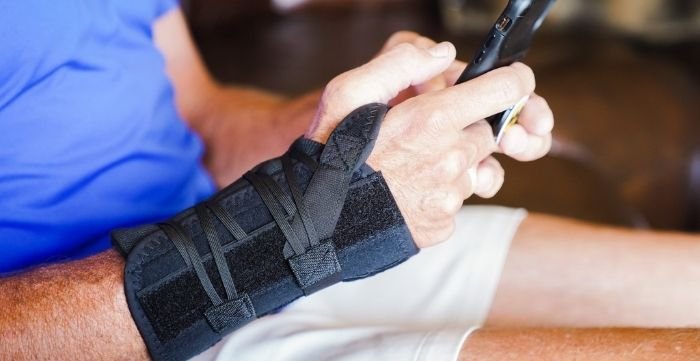
A brace isn’t the only option, and doctors don’t use these terms interchangeably. A brace is usually flexible, adjustable with straps, and removable for showering or light tasks. A splint is more rigid and limits motion further. Doctors often use one for moderate sprains or the early days after a more serious injury. A cast fully immobilizes the wrist and typically comes out only for fractures or the most severe ligament tears.
Your doctor picks the right option based on your grade, your job, and how your wrist responds in the first few days. Some people move through more than one of these as their sprain heals, starting with a splint and switching to a brace once swelling improves.
Why Wearing a Brace Helps Healing
A wrist brace holds your wrist in a neutral, straight position. That reduces strain on the healing ligament every time you move your hand. It also limits the small, repetitive motions that would otherwise slow healing down.
Beyond protecting the ligament, a brace can:
- Ease pain and discomfort during everyday tasks
- Reduce swelling by limiting movement
- Support the wrist during light daily activity
- Lower your risk of re-injuring the same ligament
If your job or sport puts extra strain on your wrist, you may need a brace even after your doctor clears you for regular activity. Our guide to wrist brace options compares different styles if you’re shopping for one.
Choosing the Right Wrist Brace
Not every wrist brace fits every sprain. Look for adjustable straps, since your wrist will likely swell and shrink over the healing period. A brace with a metal or plastic splint insert offers more rigid support for moderate sprains. A simpler compression-style brace suits mild strains or ongoing daily support.
Breathable fabric matters too, especially if you’ll wear the brace for several weeks. A brace that traps too much heat and sweat can irritate your skin. That makes you want to take it off more than you should. Try a brace on before buying if you can, since fit varies noticeably between brands and hand sizes.
How to Wear a Wrist Brace Correctly
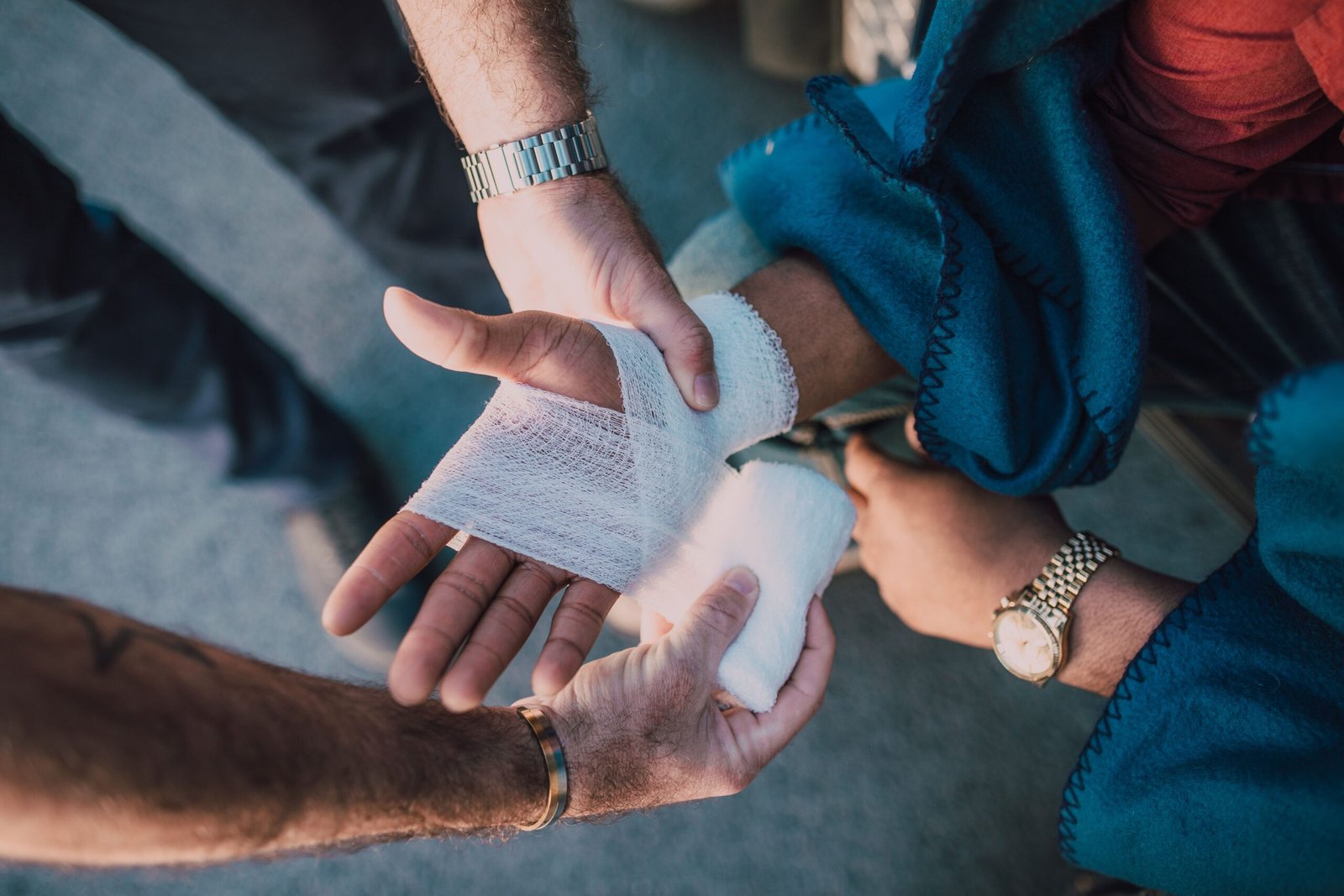

A brace only works well if you wear it correctly. Follow these steps:
- Open the brace fully and lay it flat. Check that the thumb cutout and Velcro straps are facing the right way.
- Slide your hand in. Line your thumb up with the cutout so the brace sits naturally against your palm.
- Fold the sides around your wrist. Wrap them snugly, not tightly, around the back of your wrist.
- Fasten the straps. You should be able to slide a finger under the strap without much resistance.
A brace that’s too tight can cut off circulation and cause numbness or tingling. A brace that’s too loose won’t give your ligament the support it needs. Adjust it a few times a day, since swelling changes how snug it feels.
RICE: What to Do Alongside the Brace
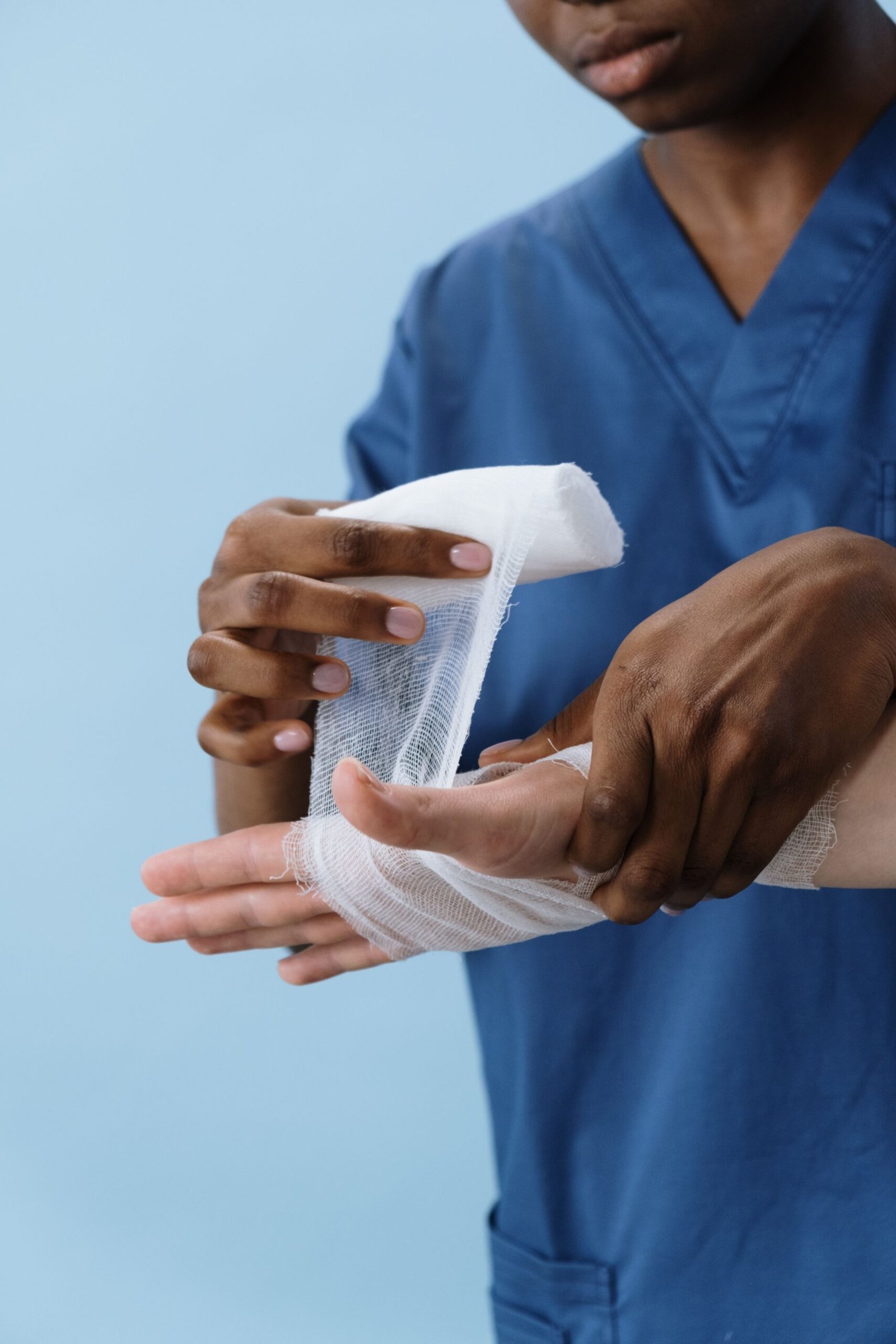
Knowing how long to wear wrist brace for sprain is only part of the picture. A brace works best paired with the RICE method, especially in the first 48 hours after your injury. The AAOS recommends:
- Rest: Avoid activities that aggravate your wrist.
- Ice: Apply a cold pack for 20 minutes at a time, several times a day, to control swelling.
- Compression: Use an elastic bandage if needed, without wrapping it too tightly.
- Elevation: Raise your wrist above heart level whenever you can.
If your pain hasn’t improved after 48 hours, it’s time to check in with a doctor rather than waiting it out on your own.
The video below explains how long to expect to wear a wrist brace and what signs tell you it’s time to stop.

Signs You Can Start Weaning Off the Brace
Most people don’t stop wearing a brace all at once. Instead, they cut back gradually as the wrist gets stronger. Watch for these signs that you’re ready to reduce brace time:
- Pain and swelling have mostly resolved
- You can move your wrist through its full range of motion without sharp pain
- Grip strength feels close to normal again
- Your doctor or physical therapist has cleared you to progress
A common approach: wear the brace during activity and sleep at first, then drop to daytime-only use. From there, save it for just the highest-risk activities, like sports or heavy lifting. If you’re recovering from a fall, our guide on recovering from a slip and fall injury covers the bigger picture beyond just the wrist.
When a Brace Isn’t Enough
The question of how long to wear wrist brace for sprain gets more complicated when the injury is serious. Some wrist injuries need more than a brace. Contact your doctor if you notice:
- Severe pain that doesn’t improve with rest and bracing
- Visible deformity in the wrist or hand
- Numbness or tingling that doesn’t go away
- Inability to move your fingers or grip anything
- Swelling or bruising that keeps getting worse after a few days
These can point to a fracture, a complete ligament tear, or nerve involvement, none of which a brace alone can fix. Mayo Clinic Sports Medicine notes that severe sprains sometimes need imaging, splinting, or surgical repair rather than a brace on its own.
If burning, numbness, or tingling in your wrist and fingers persists beyond your sprain recovery, it’s also worth asking your doctor about carpal tunnel syndrome, since the symptoms can overlap.
Common Mistakes to Avoid
- Stopping brace use too early. Even if the pain fades fast, the ligament may still need more time to fully heal.
- Wearing the brace 24/7 for too long. Extended, unnecessary wear can weaken the muscles around your wrist.
- Ignoring a poor fit. A brace that slips or pinches won’t support your wrist properly.
- Skipping rehab exercises. Once cleared, gentle strengthening helps prevent repeat sprains.
If repeated wrist or hand strain is part of your routine, our tips on preventing sports-related hand and wrist injuries can help you avoid a repeat trip through this whole process. A supportive elbow compression sleeve can also help if your injury involves strain further up the arm.
Frequently Asked Questions
How long to wear a wrist brace for a mild sprain?
Most mild, Grade 1 sprains need a brace for about 1 to 2 weeks. Pain and swelling usually settle quickly, and you can often resume light activity within days.
Can I wear a wrist brace too long?
Yes. Wearing a brace far longer than needed can weaken the muscles that support your wrist. Follow your doctor’s timeline, and wean off gradually once you’re cleared to.
Should I wear a wrist brace at night?
Often, yes, especially in the first week or two. Sleep can involve unconscious bending that stresses a healing ligament, so nighttime wear helps keep your wrist in a neutral position.
Can I still use my hand while wearing a wrist brace?
Usually, yes, for light tasks. Avoid gripping, lifting, or repetitive motions that strain the wrist until your doctor says it’s safe to resume them.
What if my wrist still hurts after wearing a brace for weeks?
See a doctor. Ongoing pain past the expected healing window can signal a more serious injury, like a complete tear or a small fracture that didn’t show up on an initial exam.
Is a wrist brace or a splint better for a sprain?
It depends on your grade. Mild sprains usually do fine with a flexible brace. Moderate to severe sprains often need the extra rigidity of a splint, at least for the first few weeks, before switching to a brace.
Can I go back to sports while wearing a wrist brace?
Sometimes, with your doctor’s approval. Light, low-impact activity may be fine with a brace on, but contact sports and heavy lifting usually need to wait until your wrist is fully healed.
Bottom Line
How long to wear wrist brace for sprain comes down to how severe the injury is. Mild sprains usually need one for a week or two. Moderate and severe sprains need longer, sometimes alongside other treatment like a splint or physical therapy.
Pair the brace with rest, ice, compression, and elevation early on. Wear it correctly, and don’t rush to take it off. If pain, numbness, or swelling doesn’t improve on the expected timeline, check in with a doctor rather than pushing through it alone. Getting this part right now can save you months of lingering wrist trouble later.


Hi, I’m Mamon, the content creator behind this blog. I share my experience in blogging, WordPress, SEO, and affiliate marketing through honest product reviews, in-depth buying guides, and practical how-to articles. Every piece of content is thoroughly researched and written to help readers make informed decisions.