

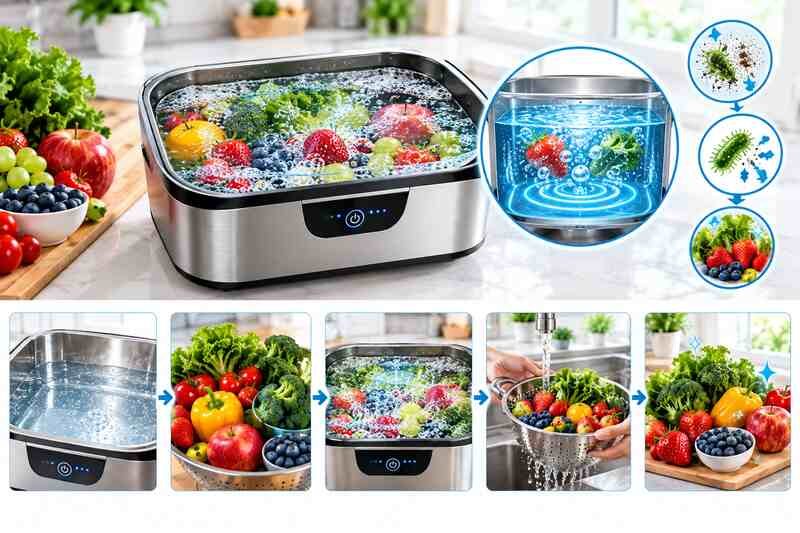

Keeping food safe is very important to us all. The ultrasonic fruit cleaner is a newer way to clean produce that’s getting a lot of attention. It uses sound waves to clean. That’s different from older methods that don’t always get rid of all the dirt. So, does ultrasonic fruit cleaner work well enough to be worth it? Many people ask this exact question. The honest answer is: yes, to a meaningful degree, though not as a miracle cure. It uses sound waves to loosen dirt, bacteria, and some pesticide residue from fruits and veggies. For some contaminants, it outperforms just using a brush or running water alone.
This kind of cleaning isn’t just for big produce-packing facilities anymore. Compact versions are now sold for home kitchens and small food businesses. Used correctly, it can clean produce gently while helping preserve freshness. Whether a countertop unit is worth adding to your routine depends largely on what the actual evidence shows, not just what the packaging promises.
This guide answers the question a lot of shoppers are quietly asking: does ultrasonic fruit cleaner work as advertised, or is it mostly hype? We’ll walk through the peer-reviewed studies, explain the physics behind the cleaning action, and be upfront about where the marketing oversells what the technology can actually do.
Key Takeaways
- Ultrasonic cleaning uses high-frequency sound waves to create tiny bubbles that loosen dirt, bacteria, and some pesticide residue
- Peer-reviewed research on tomatoes found ultrasonic cleaning removed about 88.9% of one tested pesticide, more than tap water or detergent alone
- A University of Southampton study found ultrasonic treatment reduced bacterial levels on spinach leaves more effectively than plain water rinsing
- No washing method, ultrasonic or otherwise, removes 100% of residue or bacteria
- Results vary by device wattage, frequency, soak time, and the type of produce being cleaned
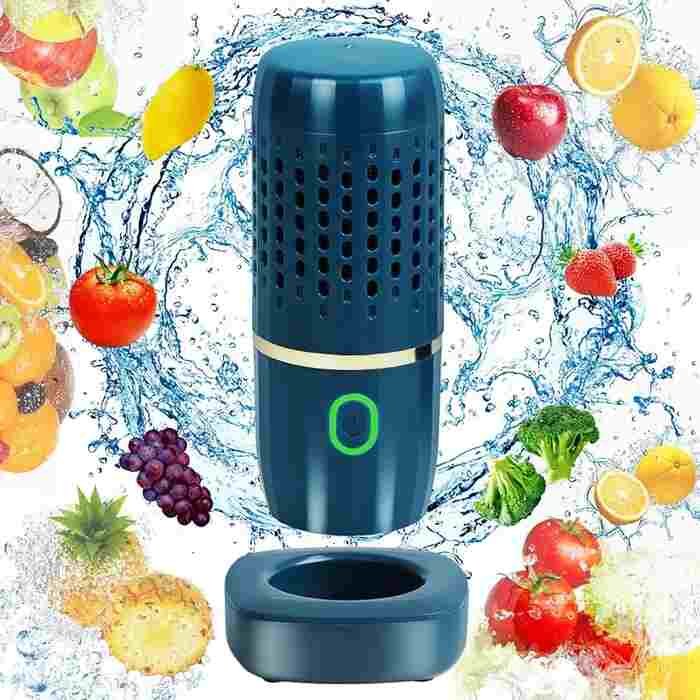

Understanding Ultrasonic Cleaning Technology
Ultrasonic cleaning technology is a newer approach to washing fruits and vegetables. It relies on physics rather than scrubbing to loosen what’s stuck to produce surfaces.
The method works by generating sound waves in a tub of water. Those waves create a cleaning action that’s very different from simply running water over food.
Before getting into the research, it helps to answer the basic mechanical question first: does ultrasonic fruit cleaner work through heat or chemicals? It does not. The cleaning action comes entirely from sound-wave-driven physics, which is part of why the devices don’t need soap, bleach, or any added cleaning solution to function.
What Are Ultrasonic Waves
Ultrasonic waves are sound waves pitched above what humans can hear, generally above 20 kHz. When directed into water, they create the vibrations that do the actual cleaning work.
- Frequency range: Typically 20-40 kHz in consumer devices
- Wavelength: Extremely short, which allows the effect to reach into small crevices
- Action: Vibration-driven, not heat-driven or chemical-driven
The Science Behind the Cavitation Effect
The cleaning power of ultrasonic devices comes from a phenomenon called cavitation. The sound waves create millions of microscopic bubbles in the water. Those bubbles collapse, or implode, releasing tiny bursts of energy right at the produce surface. That’s what dislodges dirt, some bacteria, and surface residue that a simple rinse might miss.
Key Components of Ultrasonic Produce Cleaners
| Component | Function |
|---|---|
| Transducer | Converts electrical energy into ultrasonic waves |
| Cleaning Tank | Holds water and produces the cavitation effect |
| Frequency Generator | Controls wave intensity and cleaning power |
| Timer | Controls cycle length, since different produce needs different soak times |
Knowing how these parts work together helps explain why ultrasonic cleaning behaves differently from a basic rinse. The next question is whether that difference actually shows up in test results.
Does Ultrasonic Fruit Cleaner Work? What the Research Shows


This is where marketing claims and actual peer-reviewed data start to diverge. Here’s what controlled research has actually measured, rather than what a product listing promises.
Pesticide Residue: A Real Comparison Study
A study published in the journal Ciência e Tecnologia de Alimentos tested how well different washing methods removed a pesticide from tomato surfaces. The pesticide was dichlorvos (DDVP), an insecticide, and each method was tested after a 15-minute wash. The results were more nuanced than “ultrasonic wins at everything”:
| Washing Method | DDVP Removal |
|---|---|
| Tap water | 30.7% |
| Commercial detergent solution (3%) | 70.7% |
| Ultrasonic cleaner (300 W) | 88.9% |
| Ozonated water (6 mg/L) | 91.9% |
Ultrasonic cleaning clearly outperformed plain tap water in this study. It also beat a detergent solution. Interestingly, ozonated water edged it out slightly. The honest takeaway is that ultrasonic cleaning is one of several genuinely effective options. It’s not automatically the single best method under every condition tested.
Bacteria: The Southampton Spinach Study
Separately, researchers at the University of Southampton tested acoustic (ultrasonic) cleaning against plain water rinsing. The produce used was spinach leaves taken directly from field crops. Led by Professor Timothy Leighton, the study found that after just two minutes of acoustic treatment, bacterial levels stayed significantly lower for up to six days afterward. That’s compared to untreated leaves, and with no additional damage to the leaves themselves. The research was published in the journal Ultrasound in Medicine and Biology.

Together, these two studies are the strongest evidence behind the claim that ultrasonic cleaning does something plain water doesn’t. Neither one supports the inflated “removes 99% of everything” claims you’ll see on some product pages.
Where the Marketing Claims Go Too Far
Plenty of ultrasonic cleaner listings advertise numbers like “removes 99.9% of pesticides and bacteria.” Most don’t link to any study that actually tested that specific claim. It’s worth being skeptical of specific percentages that aren’t tied to a named, published source. Pesticide and bacteria removal varies enormously by chemical, produce type, water temperature, and cycle length, so a single headline number rarely tells the whole story.
What the real research does support is more modest, but still genuinely useful:
- Meaningfully better than tap water alone for at least some pesticide residues, based on controlled tomato testing
- Better bacterial reduction than plain rinsing on leafy greens, based on the Southampton spinach research
- Gentle on delicate produce, since there’s no scrubbing or abrasive contact involved
- No heat or added chemicals required for the cleaning action itself
None of that adds up to “removes all pesticides” or “kills all bacteria.” Every washing method, including ultrasonic cleaning, leaves some residue behind. That’s especially true for anything that has already absorbed below the produce’s surface.

How Ultrasonic Cleaners Actually Remove Contaminants
Understanding the mechanism helps explain both the strengths and the limits of ultrasonic produce cleaning.
The Cavitation Mechanism
As covered earlier, cavitation is the collapse of microscopic bubbles against the produce surface. This physically dislodges particles sitting on the outside of the skin. It’s a mechanical and physical process, not a chemical one. That’s part of why ultrasonic cleaning doesn’t require soap or bleach to work.
Why It Doesn’t Reach Everything
Cavitation acts on surfaces. It cannot pull out pesticide residue that has already penetrated into the flesh of a fruit or vegetable. That’s the same limitation every washing method faces, ultrasonic or otherwise. Peeling, in addition to washing, remains the most reliable way to reduce exposure to any residue that has moved below the skin.
Comparing Cleaning Methods
Based on the tomato study above, here’s how the tested methods stacked up against each other. This is for one specific pesticide only:
| Cleaning Method | Contaminant Removal Rate (DDVP on tomatoes) |
|---|---|
| Tap Water Washing | 30.7% |
| Water and Detergent | 70.7% |
| Ultrasonic Cleaning | 88.9% |
Keep in mind this reflects one pesticide on one type of produce. Results will differ for other chemicals, other fruits and vegetables, and other device settings. No single study covers every possible combination, so treat these numbers as a useful benchmark rather than a universal guarantee.
Best Practices for Using an Ultrasonic Fruit Cleaner
Learning to use an ultrasonic fruit cleaner properly makes a real difference in results. A few simple habits go a long way, and they’re the same habits that determine whether does ultrasonic fruit cleaner work for your specific kitchen or just sits in a cabinet unused.
To get the most out of your device, follow these general steps:
- Remove any large visible dirt or debris from produce before placing it in the unit
- Fill the cleaning container with cool water, following your device’s fill line
- Arrange fruits and vegetables so they aren’t stacked tightly on top of each other
- Select a cleaning time appropriate for what you’re washing
Different produce benefits from different cleaning times. Delicate items need a gentler touch than sturdier ones.
| Produce Type | Typical Cleaning Time | Special Considerations |
|---|---|---|
| Soft Berries | 1-2 minutes | Gentle handling recommended; avoid overcrowding |
| Root Vegetables | 2-3 minutes | Remove excess dirt beforehand |
| Leafy Greens | 1-2 minutes | Spread leaves evenly, don’t pack the basin |
A few additional habits worth building in:
- Always start with clean water in the tank
- Avoid overcrowding the cleaning container, since produce needs to move freely for the effect to work
- Rinse produce under running water after the ultrasonic cycle
- Dry thoroughly before storing to reduce the chance of spoilage
Our guide on how to wash fruits and vegetables to remove pesticides covers the baseline routine. That routine still applies even if you’re adding an ultrasonic step on top of it.
Limitations Worth Knowing Before You Buy
An honest answer to does ultrasonic fruit cleaner work also means being upfront about what it can’t do.
- It’s not FDA-regulated as a food-safety appliance. There’s no government certification confirming any specific removal percentage for any specific device.
- Results vary a lot by device. Wattage, frequency, tank size, and water temperature all affect performance, and cheaper units may underperform the ones used in published studies.
- It won’t remove absorbed residue. Pesticide that has moved beneath the skin needs peeling, not washing, to fully address.
- It’s an extra step, not a replacement for basic hygiene. Clean hands, clean cutting boards, and prompt refrigeration still matter just as much.
If you’re deciding whether the investment is worth it for your household, our fruit and vegetable cleaner buyer’s guide compares several options side by side. And if you’d rather skip the appliance altogether, our piece on how to wash fruits and vegetables to remove pesticides covers what you can accomplish with just water, baking soda, and a produce brush.
Why Produce Safety Matters
Foodborne illness from contaminated produce isn’t a hypothetical concern. Multistate E. coli O157:H7 outbreaks linked to romaine lettuce hit the U.S. and Canada in both 2018 and 2019. The 2018 outbreak sickened 62 people across 16 states and the District of Columbia. Among those with available information, 46% were hospitalized. The 2019 outbreak was larger, sickening 167 people across 27 states. Of those cases, 52% were hospitalized, and 15 people developed hemolytic uremic syndrome, a serious kidney complication. Both outbreaks were traced back to romaine grown in California.
No washing method, ultrasonic or otherwise, could have fully prevented contamination that happened during growing or processing. But these outbreaks are a useful reminder of why thorough washing, of any kind, is worth the extra few minutes it takes at home.
Who Should Consider an Ultrasonic Fruit Cleaner
Not every household needs one. Whether does ultrasonic fruit cleaner work out to be a worthwhile purchase really depends on how you shop and cook.
- Households that eat a lot of fresh produce. If berries, leafy greens, and other Dirty Dozen items are a daily staple, the added cleaning step has more opportunities to matter.
- People who want an evidence-based middle ground. It sits between plain water rinsing and harsher options like bleach solutions, without introducing new chemicals.
- Anyone already washing produce by hand. The device adds a passive soak step rather than replacing your current routine, so it layers on top of habits you likely already have.
- Shoppers who buy conventionally grown produce from the Dirty Dozen list. That’s where the research shows the clearest measurable benefit over tap water alone.
On the other hand, if you already peel most of your produce, buy mostly from the Clean Fifteen list, or are satisfied with a simple baking soda soak, an ultrasonic device may be an unnecessary expense. It’s a genuinely useful tool for the right household, not a must-have for every kitchen.
Conclusion
So, does ultrasonic fruit cleaner work? Based on the available research, yes, in a real but bounded way. Peer-reviewed testing on tomatoes found ultrasonic cleaning removed close to 89% of one tested pesticide, well ahead of tap water alone. Separate research out of the University of Southampton found ultrasonic treatment reduced bacterial levels on spinach leaves more than plain rinsing, with the effect lasting several days.
What the science doesn’t support is the idea that ultrasonic cleaning removes essentially all contaminants, or that it can replace basic food safety habits altogether. It’s a genuinely useful addition to a produce-washing routine, not a substitute for one.
If you’re weighing whether to add an ultrasonic cleaner to your kitchen, treat it as one more layer of protection alongside thorough rinsing, not a replacement for it. Used consistently and with realistic expectations, it’s a reasonable way to get cleaner produce with less scrubbing.


Hi, I’m Mamon, the content creator behind this blog. I share my experience in blogging, WordPress, SEO, and affiliate marketing through honest product reviews, in-depth buying guides, and practical how-to articles. Every piece of content is thoroughly researched and written to help readers make informed decisions.