

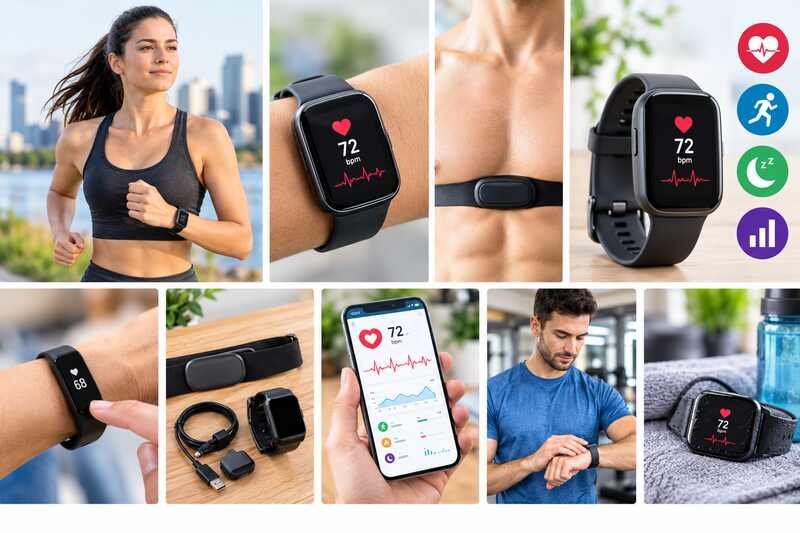

A heart rate monitor that reads 15 beats per minute too high or too low is not a minor annoyance. It can send you through an entire workout in the wrong training zone. Wrist-based optical sensors are convenient, but research has repeatedly found they lose accuracy during intense exercise. If you actually want to train by the numbers, look toward an accurate heart rate monitor built around a chest strap. A purpose-built armband is the next best option. That is where the real precision lives.
Below, we review five real heart rate monitors worth considering for a U.S. household in 2026. Each entry covers who the device fits best, along with the pros and cons that matter once you’re mid-workout. Maybe you want the gold-standard chest strap. Maybe you’d rather have a comfortable everyday wrist option. Either way, these picks will help you find the most accurate heart rate monitor for how you train.
1. Polar H10 Heart Rate Sensor
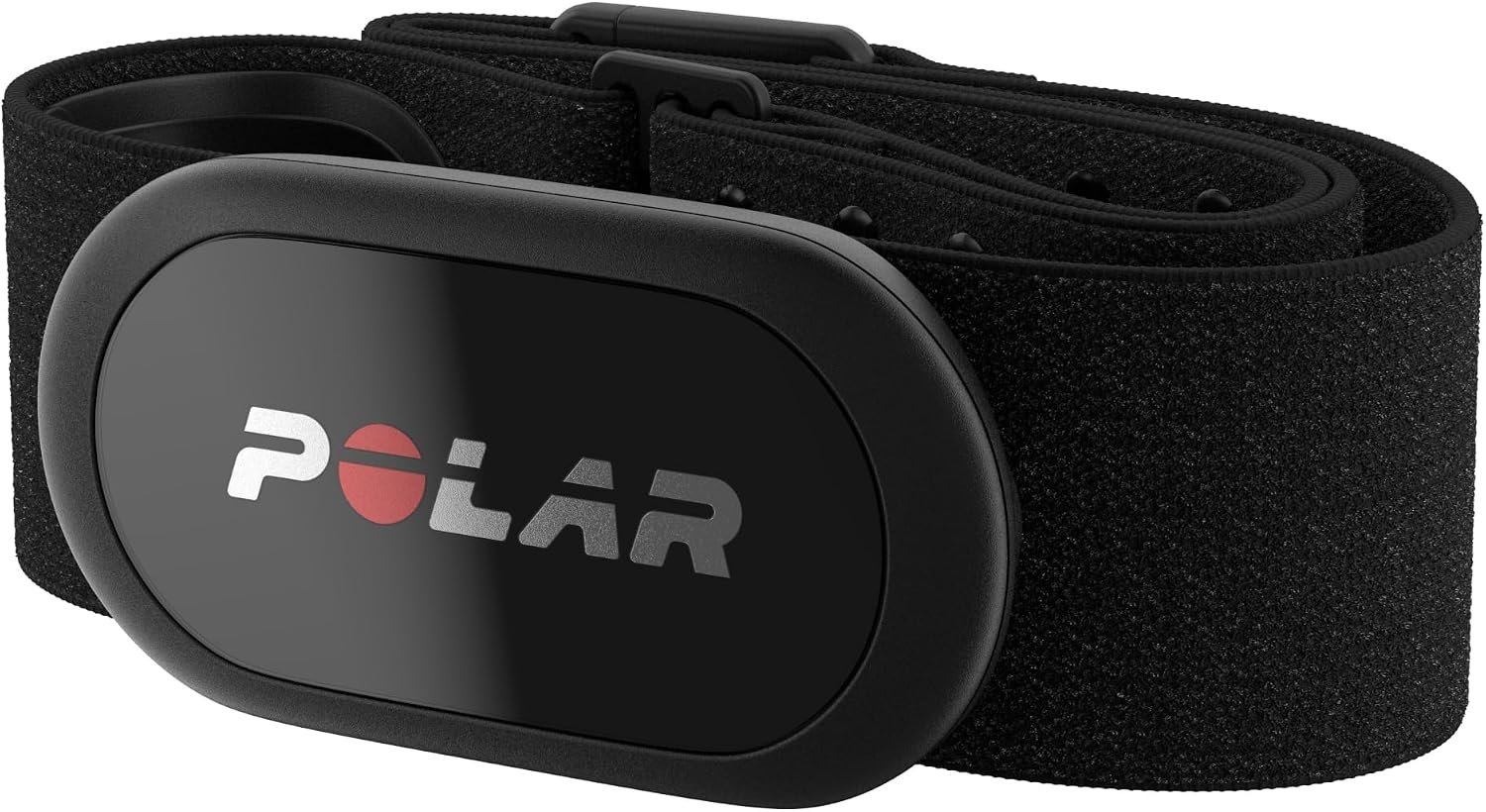

Photo: Amazon
The Polar H10 is widely regarded as the gold standard for accuracy. That makes it ideal for serious runners, cyclists, and anyone who wants lab-grade data without an actual lab. Its ECG-based chest strap reads electrical signals directly from the heart. That is the same principle doctors use in a clinical setting, rather than estimating pulse through the skin.
Pros:
- ECG-based sensor that Polar calls the most accurate in the company’s history
- Dual connectivity over Bluetooth and ANT+, with a broadcast range of nearly 300 feet
- Long battery life of up to 400 hours on a single CR2025 coin cell
- WR30 water resistance rated for swimming
Cons:
- A chest strap takes more getting used to than a wristband for some users
This sensor’s ECG-based measurement is the reason it keeps showing up at the top of independent accuracy tests. A wrist sensor shines light through the skin and infers a pulse from blood flow. The H10 skips that guesswork entirely. It reads the heart’s actual electrical activity, the same way a hospital ECG does it. That precision matters most during sprints, interval training, or strength work. Optical wrist sensors are most likely to lag behind or flatline in exactly those moments.
Beyond the sensor itself, the H10 pairs with both Bluetooth and ANT+ devices simultaneously. It can talk to a phone app and a sports watch at the same time. It also runs roughly 400 hours on a single replaceable coin cell. That makes it the kind of accurate heart rate monitor you set up once and mostly forget about. About once a year, you will need to swap the battery.
2. Garmin HRM 600
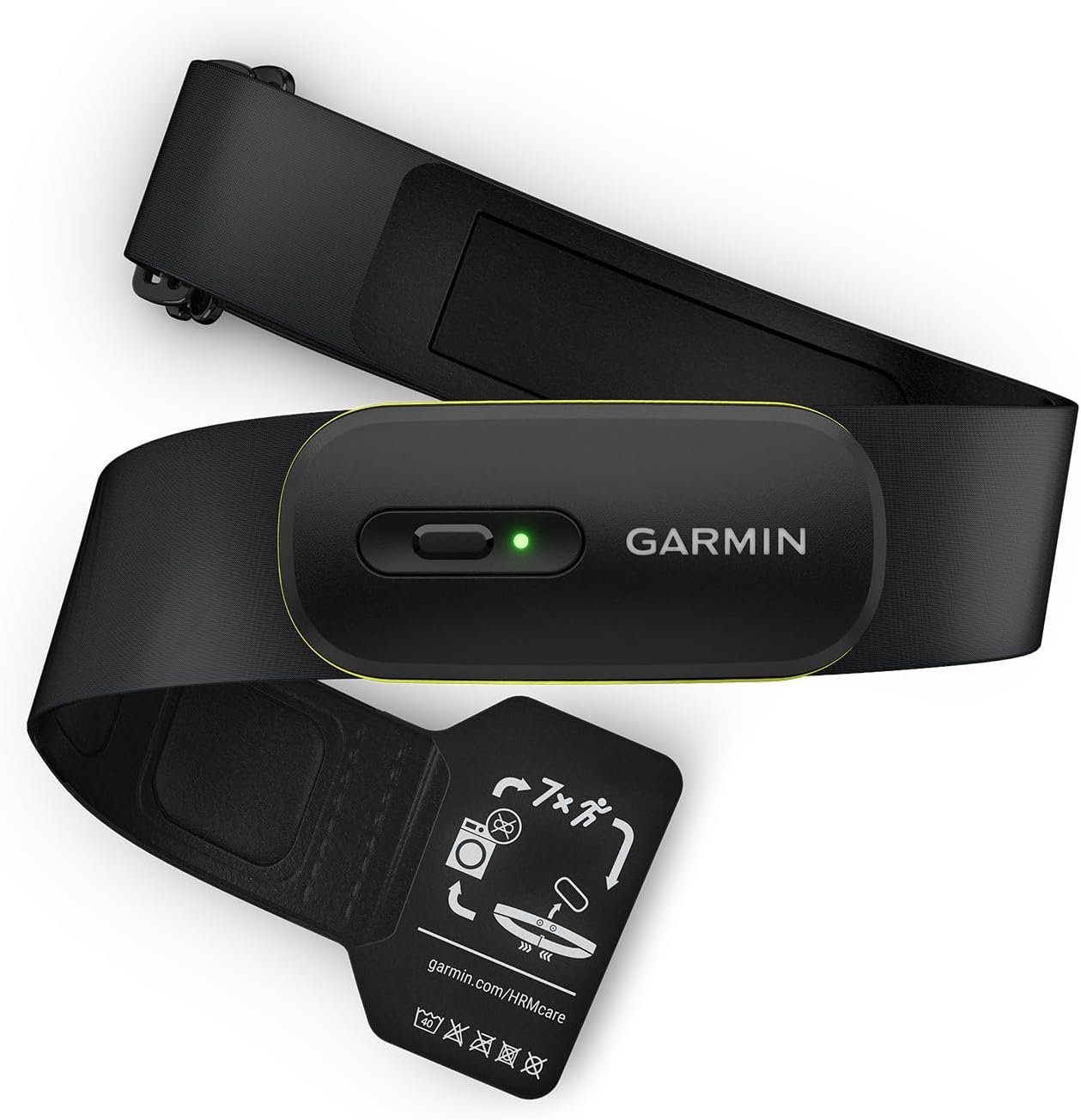

Photo: Amazon
The Garmin HRM 600 is ideal for anyone already training inside the Garmin ecosystem, whether that’s a Forerunner, Fenix, or Venu watch. It goes beyond a basic pulse reading, too. It captures advanced running dynamics like step speed loss, stride length, vertical oscillation, and ground contact time balance.
Pros:
- Captures advanced running dynamics in addition to heart rate, even without a watch in range
- Stores and syncs data later if your watch isn’t nearby during a workout
- Dual ANT+ and Bluetooth transmission
- Rechargeable battery rated for up to two months, plus a machine-washable strap in two sizes
Cons:
- Its extra running-dynamics features are most useful if you already own a compatible Garmin watch
What sets the HRM 600 apart is its onboard memory. Say you head out for a run without your watch. The strap keeps recording heart rate and pace data on its own. It syncs the whole session the next time it is back in range. That is a genuinely practical feature for anyone who occasionally trains without their usual gear.
The HRM 600 transmits over both ANT+ and Bluetooth. That means it also works with third-party apps and other brands’ watches, not just Garmin devices. Its rechargeable battery lasts roughly two months per charge, and the strap itself is machine washable. Combined, that makes it a strong pick for anyone who wants an accurate heart rate monitor that quietly does more than the basics.
3. Wahoo TRACKR Heart Rate Monitor
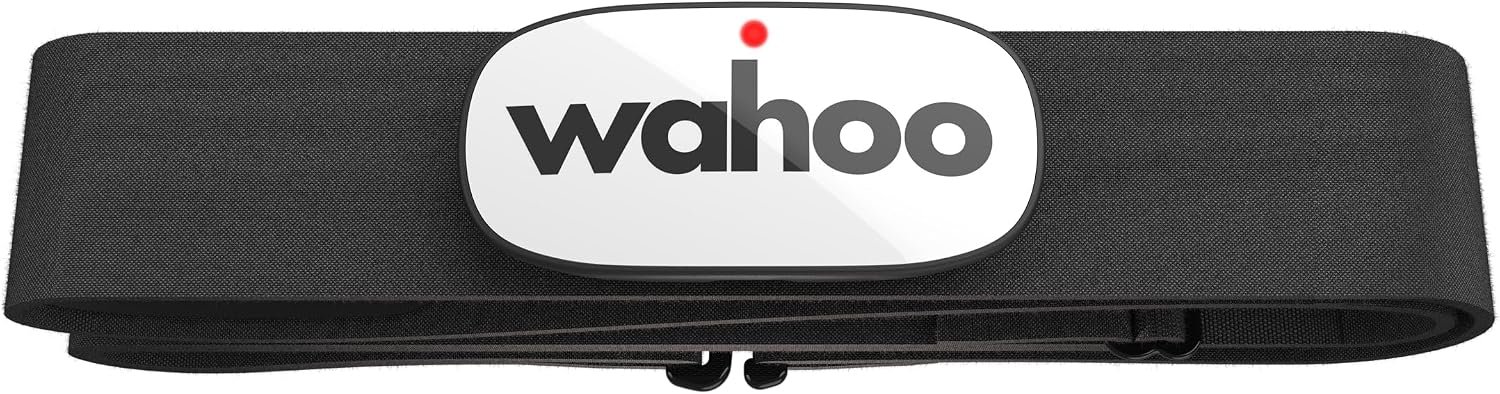

Photo: Amazon
The Wahoo TRACKR is ideal for budget-conscious athletes who still want a genuine chest strap instead of a less accurate wrist sensor. It is Wahoo’s current chest strap. It replaces the older TICKR line with a rechargeable design.
Pros:
- Rechargeable lithium-ion battery with USB-C charging and 100-plus hours of runtime
- IPX7 water resistance, rated for sweat and rain
- Broadcasts to up to three Bluetooth devices at once, plus ANT+
- Notably lower price than the premium chest straps on this list
Cons:
- Fewer advanced training-dynamics extras than the Garmin HRM 600
For an athlete who just wants dependable chest-strap accuracy without paying a premium, the TRACKR covers the fundamentals well. Its USB-C rechargeable battery means no more hunting for a specific coin cell size. It can also broadcast to three Bluetooth devices simultaneously. That makes it easy to pair with a phone app, a watch, and a gym display all at once.
The IPX7 rating means sweat and rain are non-issues. That covers the overwhelming majority of real-world training conditions. Maybe your main goal is simply replacing an inaccurate wrist reading with real chest-strap data. If so, this is the least expensive way onto this list.
4. Scosche Rhythm+ 2.0
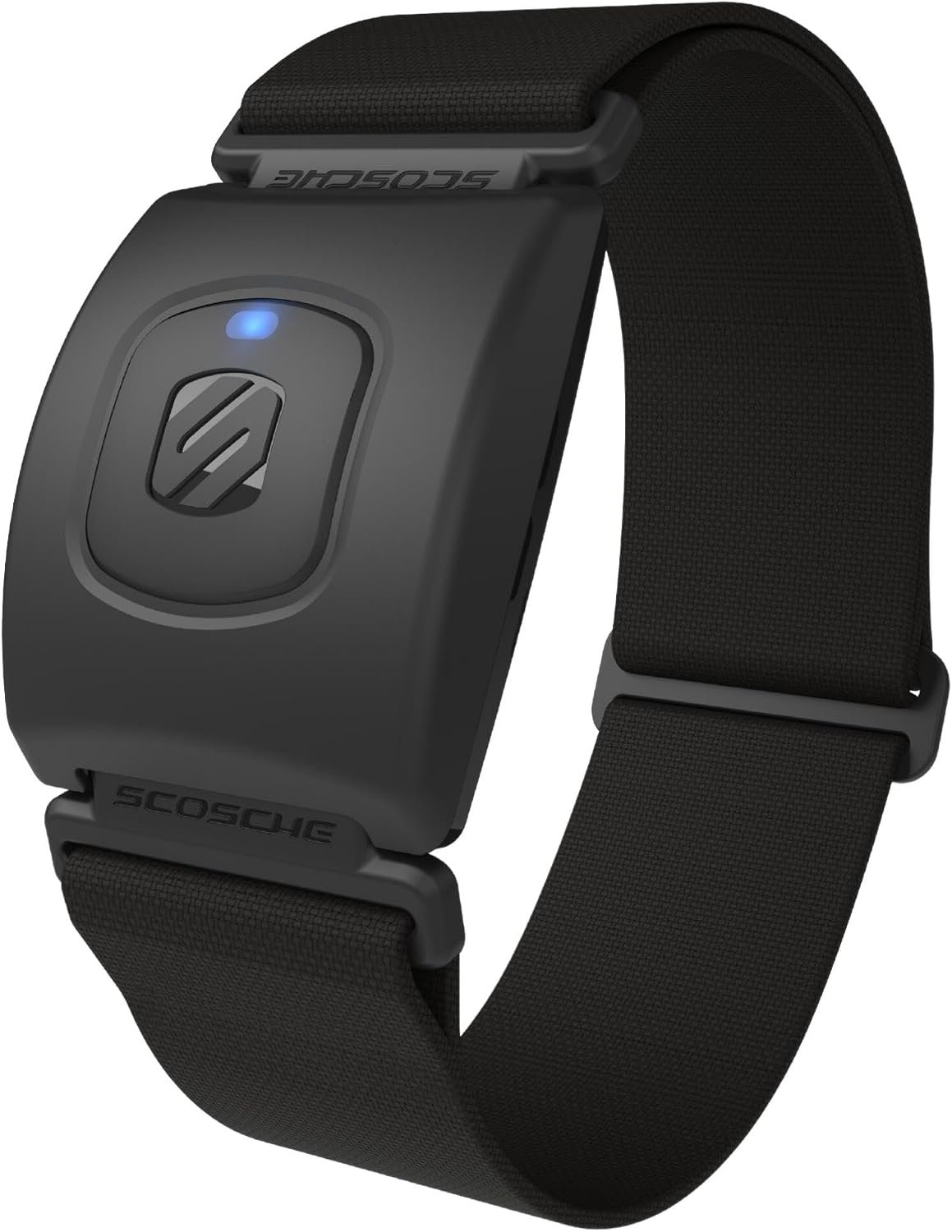

Photo: Amazon
The Scosche Rhythm+ 2.0 is ideal for anyone who wants better accuracy than a wrist sensor but does not want a strap around the chest. It uses an optical sensor built into an armband, worn on the forearm above the wrist. Blood flow readings tend to be more reliable there than at the wrist itself.
Pros:
- IP68 water and dust resistance, safe for pool workouts
- Up to 24 hours of battery life per charge
- Dual-mode Bluetooth and ANT+, compatible with more than 200 fitness apps
- No chest strap required, which some users find more comfortable
Cons:
- Still an optical sensor, so it is generally not quite as precise as a true chest strap during very high-intensity intervals
The Rhythm+ 2.0’s forearm placement is the key to its improved accuracy over a typical wrist-based tracker. There is simply more consistent blood flow a few inches up the arm than right at the wrist bone. Scosche also markets the device as tested for reliable readings across different skin tones. That addresses a documented weak point of many optical sensors.
It gets roughly 24 hours of battery life per charge. It is also broadly compatible, working with more than 200 fitness apps. Together, that makes it a practical middle ground for someone who wants meaningfully better accuracy than a fitness watch alone, without fully committing to a chest strap.
5. Fitbit Charge 6
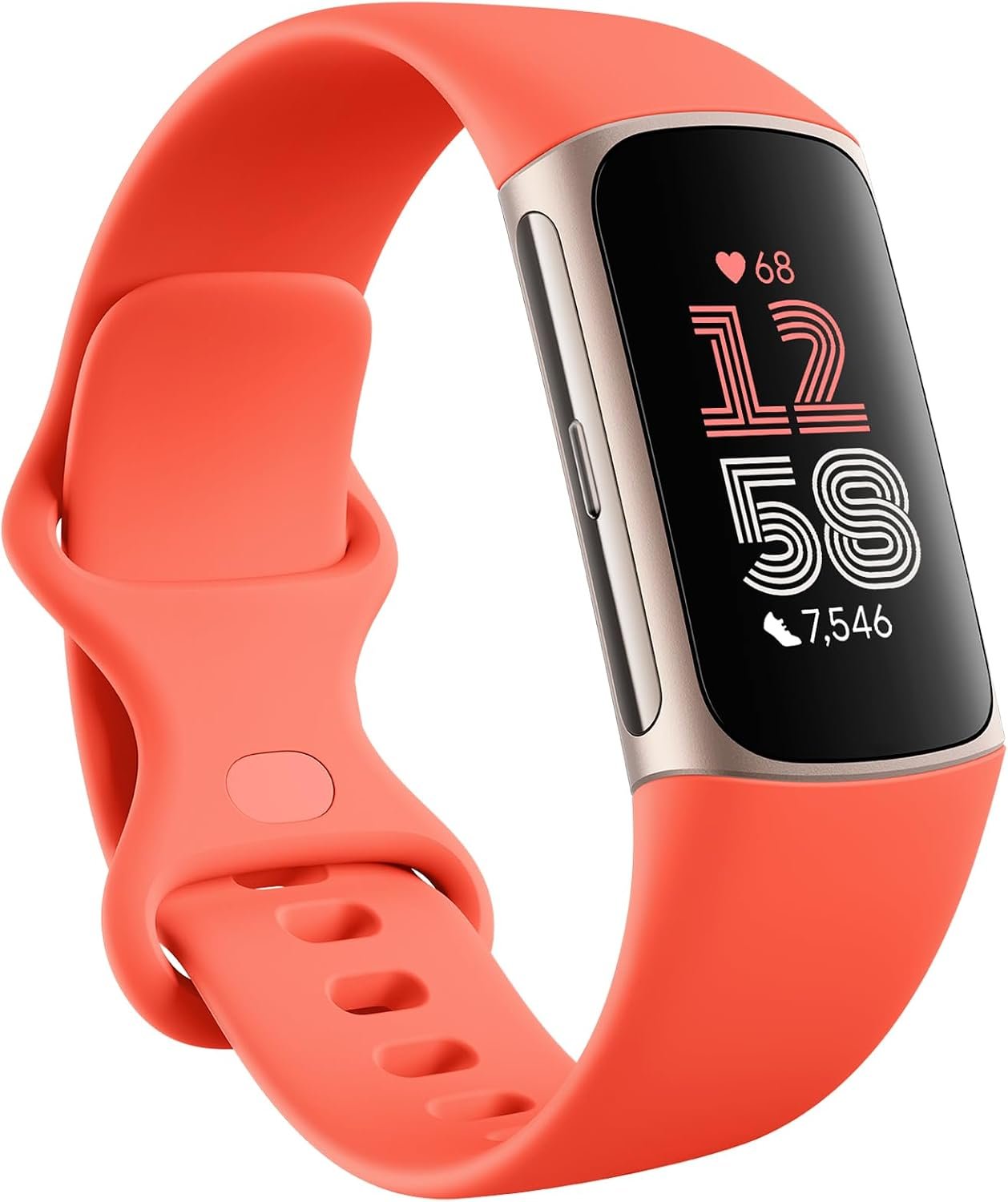

Photo: Amazon
The Fitbit Charge 6 is ideal for everyday wear. It suits someone who wants a single wrist device that handles heart rate, sleep, notifications, and daily activity. There’s no switching between a watch and a separate strap. It is Fitbit’s most accurate wrist-based option to date.
Pros:
- Google claims up to 60% more accurate heart rate tracking during vigorous activity compared with earlier Fitbit trackers
- On-device ECG app for AFib rhythm assessment
- Water resistant to 50 meters and rated for a 7-day battery life
- Integrates with Google Maps and Google Wallet
Cons:
- Still a wrist-based optical sensor, so a chest strap remains more accurate during peak-intensity efforts
Fitbit’s pitch for the Charge 6 leans specifically on accuracy, and the improvement over older Fitbit trackers is real. Even so, a wrist sensor still cannot fully match a chest strap during an all-out sprint. For daily step tracking, resting heart rate, and moderate cardio sessions, though, it is accurate enough. That covers the overwhelming majority of users. It also bundles in an ECG app and smart features that a plain chest strap does not offer.
Some people simply do not want to swap a strap on and off for every workout. For them, one device that stays on all day is worth more than a few extra beats of precision. That is who the Charge 6 is for: the most realistic accurate heart rate monitor on this list for everyday life.
Why Chest Straps Are More Accurate Than Wrist Sensors
The gap between chest-strap and wrist-based accuracy is not just marketing. A study presented at the American College of Cardiology’s Annual Scientific Session compared a chest strap against five wrist-worn trackers. Researchers used EKG as the reference standard during treadmill, bike, and elliptical workouts. According to the American College of Cardiology, the chest strap tracked EKG readings almost perfectly. The wrist devices, by contrast, showed errors of up to 34 beats per minute. Accuracy dropped further as exercise intensity increased.
The reason comes down to physiology. A chest strap reads the heart’s electrical signal directly, similar to a hospital ECG. A wrist sensor, meanwhile, shines light through the skin and estimates pulse from how blood flow changes underneath it. Motion, sweat, wrist position, and even skin tone can all interfere with that optical reading. That is exactly when an accurate heart rate monitor matters most. Think hard intervals, heavy lifting, or any workout with a lot of wrist movement.
Understanding Your Target Heart Rate Zones
An accurate heart rate monitor is only useful if you know what to do with the numbers. According to the American Heart Association, moderate-intensity exercise generally falls between 50 and 70 percent of your estimated maximum heart rate. Vigorous activity falls between 70 and 85 percent. A common rough estimate for max heart rate is 220 minus your age. Beginners should start at the lower end of that range. From there, build up gradually rather than pushing straight into a vigorous zone.
Knowing your zone in real time is exactly where accuracy matters most. A wrist sensor that reads 10 beats too low can make a vigorous effort feel moderate, and vice versa. Over weeks of training, that drift can quietly undercut a structured plan. A chest strap or armband removes most of that guesswork.
If you are also tracking other vitals during workouts, our fingertip pulse oximeter buying guide covers devices that measure blood oxygen alongside heart rate. Our explainer on how fitness trackers measure blood pressure is also worth a read. It can help if you are deciding between a dedicated chest strap and an all-in-one wrist device.
How to Choose the Right Type for Your Training
Not everyone needs the same kind of accurate heart rate monitor. The right pick depends mostly on how hard and how often you train, not on which device has the most features.
Do you race, follow a structured interval program, or lift heavy on a regular basis? A chest strap like the Polar H10, Garmin HRM 600, or Wahoo TRACKR is worth the extra step of putting it on. The accuracy gain during hard efforts is real. Already own a compatible sports watch? Matching the strap to that ecosystem, Garmin to Garmin, unlocks extra data at no added cost.
A chest strap can feel like too much commitment for some. An armband like the Scosche Rhythm+ 2.0 is a reasonable middle ground instead. It reads more consistently than the wrist during moderate effort, even if it still trails a true chest strap at high intensity. For everyday steps, sleep tracking, and casual workouts, a wrist device like the Fitbit Charge 6 remains the most convenient option, with a bit of extra error during your hardest sessions.
Watch: How Heart Rate Monitor Accuracy Actually Compares
This video breaks down the real-world accuracy differences between wrist-based, armband, and chest-strap heart rate monitors. It is useful context before deciding which type fits your training.

Frequently Asked Questions
What Is the Most Accurate Heart Rate Monitor Available?
The Polar H10 is widely considered the most accurate option on the consumer market. Its ECG-based chest strap reads the heart’s electrical signal directly, rather than estimating pulse optically through the skin.
Are Chest Straps Really More Accurate Than Wrist Trackers?
Yes. Research from the American College of Cardiology found wrist-worn trackers showed errors of up to 34 beats per minute compared with EKG. A chest strap, by comparison, tracked almost perfectly. The gap was most obvious during high-intensity exercise.
Can I Use a Chest Strap Without a Sports Watch?
Yes. Most modern chest straps connect over Bluetooth to a smartphone fitness app. That includes the Polar H10, Garmin HRM 600, and Wahoo TRACKR. A dedicated sports watch is not required.
Is an Armband Monitor Better Than a Wrist Tracker?
Generally, yes. Devices like the Scosche Rhythm+ 2.0 read blood flow from the forearm. That tends to be more consistent than the wrist. A true chest strap still edges out an armband during very intense intervals, though.
How Long Do Chest Strap Batteries Last?
It depends on the model. The Polar H10 uses a replaceable coin cell, rated for hundreds of hours. The Garmin HRM 600 and Wahoo TRACKR instead use rechargeable batteries, rated for about two months and 100-plus hours per charge, respectively.
How Should I Care for an Accurate Heart Rate Monitor?
Rinse a chest strap or armband with fresh water after every sweaty session. Then let it air dry fully before storing it. Salt buildup from dried sweat can interfere with the sensor’s electrode contacts over time. That slowly degrades reading accuracy. Most straps also use a removable fabric or silicone band that can be hand-washed separately from the electronic pod. Check the battery contacts occasionally for corrosion. Replace a coin cell as soon as the device starts skipping readings, rather than waiting for it to die completely.
Conclusion
Choosing the best accurate heart rate monitor comes down to how you actually train. The Polar H10 is the closest thing to a lab-grade chest strap for serious athletes. The Garmin HRM 600 adds running-dynamics tracking for anyone already in the Garmin ecosystem. The Wahoo TRACKR delivers genuine chest-strap accuracy at a lower price. The Scosche Rhythm+ 2.0 offers a strap-free middle ground. The Fitbit Charge 6 is the most realistic all-day option for people who want one device for everything.
Whichever you choose, remember that accuracy matters most during the hardest parts of your workout. That is exactly when a wrist sensor is most likely to struggle. Does your training depend on hitting specific heart rate zones? If so, a chest strap or armband will give you numbers you can actually trust, rather than an estimate that drifts the moment your effort spikes.
Related Review Article:


Hi, I’m Mamon, the content creator behind this blog. I share my experience in blogging, WordPress, SEO, and affiliate marketing through honest product reviews, in-depth buying guides, and practical how-to articles. Every piece of content is thoroughly researched and written to help readers make informed decisions.